Category: Uncategorized

  • Mastering Government Contracts: A Guide for Small Businesses Without Connections

    Mastering Government Contracts: A Guide for Small Businesses Without Connections

    Learn how small businesses can win government contracts without needing connections. Step-by-step guide to writing winning proposals.

    Mastering Government Contracts: A Guide for Small Businesses Without Connections

    Meta description: Think you need to know someone to win government contracts? You don’t. Here’s the step-by-step truth about how small businesses win competitive bids — and exactly what it takes to write a proposal that beats the competition.

    Target keyword: how to win government contracts small business

    This guide will walk you through the essential steps to master government contracts as a small business, even if you lack personal connections.

    Do You Need Connections to Win a Government Contract?

    No. And not just because it’s the right answer to give — but because the government procurement system is specifically designed and legally required to prevent favoritism.

    Federal procurement is governed by the Federal Acquisition Regulation (FAR), a body of law that mandates open, transparent, and competitive bidding. Agencies are required to:

    • Publish their solicitations publicly,
    • Evaluate responses using pre-defined criteria,
    • Document their award decisions, and
    • Make those decisions available for review.

    Any losing bidder can request a debriefing explaining why they didn’t win. Any bidder who believes the process was unfair can file a bid protest with the Government Accountability Office (GAO).

    This isn’t a loophole or a technicality. It’s the foundation of the system. Contracting officers who violate procurement rules face serious professional and legal consequences. The system isn’t perfect — no system is — but it is far more merit-based than most small business owners realize.

    What actually wins contracts? A compelling proposal. Strong past performance. Competitive pricing. The right certifications. These are all things you can control and develop, regardless of who you know.

    State and local government procurement works similarly, with its own set of procurement codes and ethics regulations. If you’re specifically targeting city and municipal contracts, our comprehensive guide to municipal procurement walks through the full process from registration to award. Commercial procurement varies more, and relationships do play a larger role in private sector work — but even there, a strong proposal and a clear value proposition will consistently beat a warm introduction backed by nothing.

    What You Actually Need to Start Winning

    Let’s get concrete. Here’s what a small business needs in place to start competing seriously for government and commercial contracts.

    Your business must be properly registered and licensed.

    For federal work, this means being registered on SAM.gov. For state and local work, most agencies require:

    • A valid business license,
    • Appropriate contractor’s license for your trade, and
    • Proof of insurance — general liability and, for larger projects, workers’ compensation and bonding.

    Get these in order before you bid anything. Being technically ineligible to perform the work you’re bidding is the fastest way to get disqualified.

    You need a past performance record.

    This is the chicken-and-egg problem every new entrant faces: you need experience to win contracts, but you need contracts to get experience. Here’s how to solve it:

    • Start with smaller contracts — the micro-purchase and simplified acquisition thresholds mean there are plenty of opportunities in the $10,000 to $250,000 range where the process is less formal and competition is thinner.
    • Subcontract for a prime contractor first to build your resume.
    • Document every project you’ve ever done that’s relevant — private commercial jobs count as past performance.
    • Get written references and document the scope, dollar value, and outcome of everything.

    You need to understand how evaluation works.

    Most government RFPs use a scoring or evaluation matrix that breaks down criteria into categories with weighted percentages. A typical breakdown might look like this:

    • Technical approach (30%)
    • Past performance (30%)
    • Management plan (20%)
    • Price (20%)

    Notice that price is only 20%. This means a contractor charging 10% more who has a stronger technical proposal and better documented past performance will often beat the lower bidder. Understanding this changes how you write proposals entirely.

    You need the ability to write a professional proposal.

    This is where most small businesses hit the wall. They’re great at the work but have never been taught how to sell on paper. A proposal isn’t just an estimate. It’s a persuasive document that builds a case for why you are the lowest-risk, highest-value choice.

    How to Write a Proposal That Wins

    Writing a winning proposal is a skill, and like all skills, it improves with practice and structure. Here’s the framework.

    Read the RFP completely before you write a single word.

    This sounds obvious but is widely ignored. Read every section, including:

    • The evaluation criteria,
    • The terms and conditions, and
    • The submission requirements.

    Many proposals are disqualified not because they’re weak but because they didn’t follow the format, missed a required attachment, or exceeded a page limit. Compliance with the instructions is the minimum bar to clear before evaluation even begins.

    Answer the question behind the question.

    Every RFP is really asking: “Why should we trust you with this?” Every section of your proposal should be building that trust. When they ask about your methodology, the real question is: do you actually know what you’re doing? When they ask about your team, the real question is: do you have the people to deliver this at the quality and scale we need? Answer the stated question, but always be building trust.

    Lead with your strongest material.

    Evaluators are busy. The executive summary — typically the first page or two — needs to make your value proposition clear immediately. State who you are, summarize why you’re uniquely qualified, and give them confidence that reading further will be worth their time. Don’t save your best points for the end.

    Mirror the buyer’s language.

    Read the RFP carefully and note the specific words and phrases the buyer uses to describe the work. Use those same words in your proposal. This isn’t plagiarism — it’s communication. It signals that you understand their world and aren’t just recycling a generic template.

    A school district that describes their grounds maintenance needs as “creating a safe, welcoming campus environment” wants to see that phrase reflected back in your proposal, not replaced with contractor-speak about “turf management protocols.”

    Be specific, not vague.

    Weak proposals are full of phrases like “we are committed to quality” and “our experienced team will ensure project success.” These are meaningless. Strong proposals say:

    “We have performed 47 commercial interior painting projects in the $50,000 to $500,000 range over the past five years, with a 94% on-time completion rate, for clients including [name], [name], and [name].”

    Specificity is credibility.

    Price competitively but not desperately.

    Pricing too low to win signals risk to experienced evaluators — it suggests you might be buying in with a number that doesn’t reflect the actual cost of performance, which leads to change orders, disputes, and poor outcomes. Price fairly, build your numbers transparently, and if your price is higher than you fear competitors will go, justify it with value — better materials, longer warranty, certified technicians, proven methodology. For a deep dive into government pricing frameworks including Davis-Bacon compliance, overhead calculations, and strategic bidding tactics, see our guide to strategic pricing for government contracts.

    Proofread everything.

    Typos and formatting errors in a proposal signal carelessness. If you can’t get a document right, the evaluator will wonder whether you’ll get the project right. Have someone who didn’t write the proposal read it before submission. Fresh eyes catch what you’ve gone blind to.

    The Role of Proposal Writing Tools

    In 2025, the landscape of proposal writing has changed significantly. AI-powered tools can now:

    • Analyze RFP documents and extract requirements automatically,
    • Generate first drafts of proposal sections based on your company profile,
    • Ensure compliance with submission requirements, and
    • Help maintain consistency across multiple simultaneous bids.

    These tools don’t replace the knowledge and judgment of experienced contractors — but they dramatically reduce the time and effort required to produce professional proposals. A contractor who previously could only bid on one or two opportunities per month can now bid on five or ten, with each proposal tailored specifically to the buyer.

    The competitive advantage isn’t just speed. It’s the ability to respond to more opportunities without sacrificing quality, which directly increases win rates and revenue.

    After You Submit: What Happens Next

    Understanding the post-submission process helps you plan and reduces anxiety about timelines.

    After submission, the agency will:

    1. Verify compliance with submission requirements,
    2. Evaluate proposals against the published criteria,
    3. Possibly request clarifications or conduct interviews, and
    4. Make an award decision.

    This process can take anywhere from two weeks to several months, depending on the agency, the contract size, and the complexity of the procurement.

    If you don’t win, always request a debriefing. This is free, it’s your right, and it provides invaluable insight into how your proposal was scored relative to the winner. Use that feedback to improve your next bid.

    Remember: winning government contracts is a long game. Most successful government contractors didn’t win their first bid. They won their fifth, or their tenth. Each proposal you submit makes you better. Each debriefing teaches you something. The contractors who succeed are the ones who treat every loss as a learning opportunity and every win as validation that the system works for those who work the system.

    Continue reading: If you’re ready to go deeper, explore our step-by-step guide to entering the municipal procurement market or learn how to build defensible pricing strategies for government bids.
  • Understanding RFPs, Proposals, and Contracts: A Guide for Small Businesses

    Understanding RFPs, Proposals, and Contracts: A Guide for Small Businesses

    Learn what RFPs, proposals, and contracts mean for your small business.

    Understanding RFPs, Proposals, and Contracts: A Guide for Small Businesses

    Meta description: Not sure what an RFP is? Never written a proposal? This beginner’s guide breaks down every term — RFP, proposal, contract, award — in plain language so your small business can start competing for real work.

    If you’ve ever heard someone say “we responded to an RFP and won the contract,” and had absolutely no idea what that meant, you’re not alone. Most small business owners — painters, HVAC techs, landscapers, general contractors — build their entire careers on word of mouth, referrals, and maybe a few handshake deals. The world of formal proposals and government contracts feels like a different language spoken by a different species.

    It doesn’t have to be. Every term in that world has a simple definition. And once you understand what these words mean, you’ll realize there’s a massive pool of work out there that you’ve been unknowingly locked out of — not because you aren’t qualified, but because nobody explained the rules. Let’s fix that right now.

    What Is a Contract?

    Let’s start with the most basic term of all. A contract is a legally binding agreement between two parties — you and a client — where one party agrees to do something (provide a service or deliver a product) and the other agrees to pay for it. You’ve almost certainly had contracts before, even informal ones. A written estimate that a homeowner signed? That’s a basic contract. A service agreement for recurring HVAC maintenance? Contract.

    In the commercial and government world, contracts are more formalized — they specify scope of work, timeline, payment terms, insurance requirements, and performance standards. But at the core, the concept is exactly the same: you agree to do the work, they agree to pay you.

    The key difference is scale and structure. Government contracts in particular are governed by specific federal and state procurement laws, which is why the process looks more complicated from the outside. But the underlying deal is the same one you’ve been making your whole career.

    What Is an RFP?

    RFP stands for Request for Proposal. It’s a document that an organization — a government agency, a corporation, a school district, a hospital — publishes when they need to hire someone to do a job and they want to choose the best option competitively.

    Think of it this way: instead of calling three contractors and asking for quotes over the phone, a large organization writes a detailed document that says “here is exactly what we need, here are our requirements, here is our deadline, here is how we’ll evaluate responses.” They publish that document publicly, and any qualified business can respond.

    The RFP is the invitation. Your response — your proposal — is your application for the job.

    RFPs are used by federal government agencies, state and local governments, school districts, hospitals, universities, corporations, and nonprofits. The federal government alone processes hundreds of thousands of solicitations every year. According to USASpending.gov, the federal government awarded over $750 billion in contracts in fiscal year 2023. State and local governments add hundreds of billions more. Corporate procurement — where large companies hire smaller ones — is a market measured in trillions.

    That work doesn’t disappear into thin air. Somebody gets it. It might as well be you.

    What Is the Difference Between an RFP, an RFQ, and an IFB?

    You’ll see a few different acronyms when you start looking for work to bid on. Here’s what they mean:

    • RFP (Request for Proposal): The most common. It’s used when the buyer wants not just a price, but a plan — your approach, your qualifications, your timeline, your methodology. The buyer is evaluating overall value, not just the lowest number.
    • RFQ (Request for Quotation): Simpler. The buyer already knows exactly what they want and just needs a price. Less writing, more quoting. Common for commodity purchases or straightforward services.
    • IFB (Invitation for Bid): Similar to an RFQ but typically used in government construction and public works projects. It’s price-driven and publicly advertised. The lowest responsive and responsible bid usually wins.

    For most small service businesses — painting, HVAC, landscaping, general contracting — you’ll encounter all three, but RFPs are the ones that give you the best chance to differentiate yourself and win on merit rather than just price.

    What Is a Proposal?

    proposal is your formal response to an RFP. It’s your chance to say: here’s who we are, here’s how we’d do this job, here’s what it would cost, and here’s why you should pick us over everyone else who responded.

    A good proposal typically includes:

    • An executive summary: A brief, compelling overview of why your company is the right choice. This is often the first and sometimes only thing a busy evaluator reads carefully.
    • Your understanding of the scope: Demonstrating that you actually read and understood what the buyer needs. This sounds obvious, but you’d be surprised how many proposals fail here.
    • Your approach and methodology: How you plan to do the work. For a painting contractor, this might mean surface preparation standards, materials specifications, crew size, and quality control procedures. For an HVAC company, it might mean equipment recommendations, installation approach, and commissioning process.
    • Your qualifications and experience: Relevant past work, certifications, licenses, insurance, team credentials. Real proof that you can deliver.
    • Your pricing: Broken down clearly, honestly, and in the format the RFP requested.
    • References or testimonials: Past clients who can confirm you do what you say you do.

    A strong proposal isn’t just a price quote with your logo on it. It’s a sales document designed to build trust and confidence. The buyer is deciding whether to hand your company thousands, sometimes hundreds of thousands, of dollars. They want to feel certain before they do.

    What Does “Award” Mean?

    When a buyer reviews all the proposals they received and makes a final decision, they issue a contract award. Being awarded means you won — the buyer has selected your proposal and is ready to enter into a contract with you.

    The award process typically goes like this: RFP is published, deadline for responses passes, evaluators score or rank the proposals, a winner is selected, and the award is announced. In government contracting, awards are often publicly posted, which is actually useful — you can look up who won past contracts, what they charged, and how they positioned themselves.

    In some cases there’s a Best and Final Offer (BAFO) round, where the top two or three bidders are invited to sharpen their proposals or pricing before the final decision. In others, especially government contracts, the first submission is the only one you get. This is why it’s critical to put your best foot forward from the start.

    What Is Proposio?

    Now that you understand what RFPs and proposals are, here’s where it gets relevant for your business specifically. Writing a great proposal is genuinely hard. It takes time, skill, and experience — and most small businesses don’t have a dedicated proposal writer on staff. The owner is usually also the estimator, the crew scheduler, the accounts receivable department, and the person answering the phone.

    Proposio is an AI-powered proposal writing platform built specifically for small businesses like yours. It helps you build, write, and organize professional, winning proposals without requiring you to be a professional writer. You feed it your project details, your qualifications, your pricing — and it helps you structure and articulate a proposal that looks like it came from a company five times your size.

    More on how to use it to win work in the other posts in this series. For now, just know it exists, and it was built for exactly the situation you’re in.

    Why Does All of This Matter for a Small Contractor?

    Here’s the statistic that should stop you in your tracks: the U.S. federal government has a legal mandate to award at least 23% of its prime contracting dollars to small businesses. That’s a congressional requirement. In fiscal year 2023, the federal government awarded over $163 billion to small businesses. State and local governments don’t have the same mandate, but many have similar goals and programs.

    This work is not reserved for Fortune 500 companies. A painting contractor in Ohio can win a contract to paint a federal building. A landscaping company in Texas can hold a grounds maintenance contract with a school district. An HVAC business in Florida can service municipal buildings under a multi-year service agreement. General contractors of all sizes win public works projects across every state every single day.

    The barrier isn’t qualification. The barrier is knowing how to present yourself on paper.

    Key Terms Glossary

    Before you move on to the next article in this series, here’s a quick-reference glossary of terms you’ll encounter:

    • Solicitation: The general term for any document inviting bids or proposals. RFPs, RFQs, and IFBs are all types of solicitations.
    • Prime contractor: The main contractor who holds the contract directly with the buyer.
    • Subcontractor: A company hired by the prime contractor to perform part of the work. Many small businesses start as subs before winning prime contracts.
    • Set-aside: A government contract reserved exclusively for certain categories of businesses, such as small businesses, veteran-owned businesses, women-owned businesses, or businesses in underserved communities.
    • NAICS code: The six-digit North American Industry Classification System code that categorizes what your business does. Essential for registering and searching for government work.
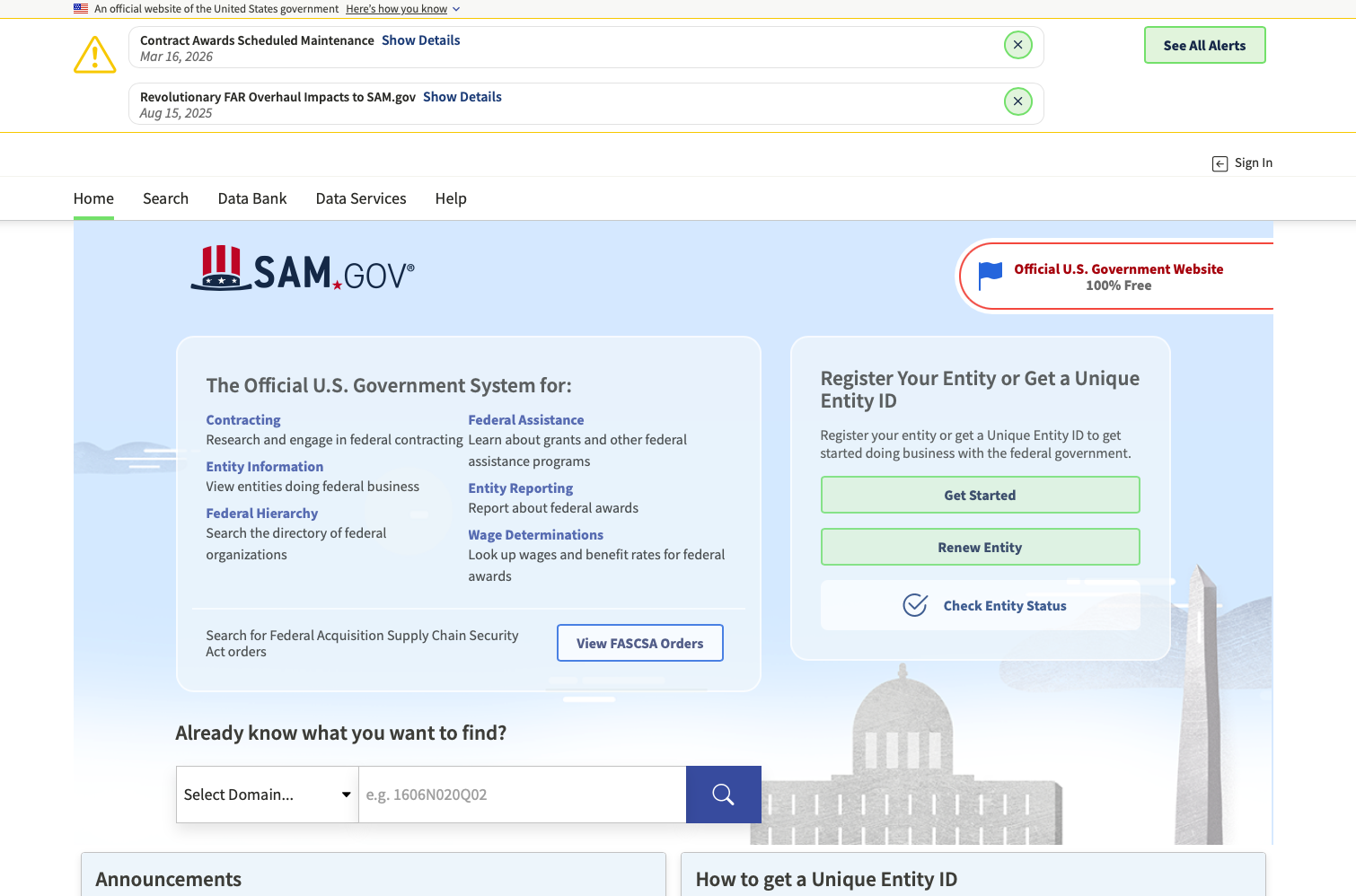
    • SAM.gov: The federal government’s official registration and opportunity database. You must be registered on SAM.gov to win a federal contract. It’s free.
    • Scope of work (SOW): The section of a contract or RFP that outlines the specific work to be done.

    Understanding ProposalsSmall business proposals

  • How a 2-Person Painting Company Secured a $107K Government Contract

    How a 2-Person Painting Company Secured a $107K Government Contract

    Discover how a small painting company won a $107K government contract without a proposal team.

    How a 2-Person Painting Company Secured a $107K Government Contract

    8 min read · Case Study

    Peter and crew at the job site

    Peter has been running paint brushes across Denver for 25 years. He knows his craft cold. His crew shows up on time, his work is clean, and his residential clients keep coming back — year after year, project after project.

    But over the past few years, something has been quietly shifting. Those loyal residential clients are calling less. Rising costs are eating into margins. And the work that used to carry the year isn’t carrying it the same way anymore.

    Peter knew the answer was commercial work: larger contracts, government buildings, and projects that could fund months of payroll in a single award. He had even tried submitting RFPs before but never won a single one.

    That changed when One of a Kind Painting submitted a bid for a commercial painting contract at the Colorado Convention Center in Denver — a city-owned facility spanning 70,000 square feet — and won a $107,000 contract that generated roughly $35,000 in profit in a single month of work.

    This is the story of how they did it, what was different this time, and what it means for painting contractors who are ready to stop leaving commercial money on the table.

    $107,000

    Contract Value

    ~$35K

    Profit in One Month

    75%

    Less Time Writing the Proposal

    The Company: 25 Years of Craft, and a Business Model Hitting Its Ceiling

    One of a Kind Painting is based in Aurora, Colorado, serving the greater Denver metropolitan area. Peter founded the business 25 years ago and has built it into a reliable residential operation — the kind that runs on word-of-mouth, repeat clients, and a reputation that takes decades to earn.

    The business runs lean: Peter as the owner, a project manager who handles coordination on larger jobs, and a rotating crew of subcontractors — typically 2 to 4 people for residential work, and up to 10 for larger projects.

    For most of its history, this model worked. But the economics of residential painting have shifted. Inflation has pushed up material costs, labor is more expensive, and longtime residential clients — the foundation of the business — are spending less or spacing out projects further apart.

    Commercial contracts had always been on Peter’s radar. The math is simple: one commercial project can equal three to five months of residential revenue. The problem was never the painting itself; Peter’s crew could handle scale. The challenge was getting in the door.

    The Hard Truth About RFP Season for Small Contractors

    Government and commercial clients don’t evaluate contractors on their reputation alone. They evaluate proposals — formal written documents that demonstrate professionalism, project understanding, compliance awareness, and pricing transparency. A contractor who can paint perfectly but can’t write a compelling proposal doesn’t get a chance to swing a brush.

    The Problem: Great Painters. Brutal Proposal Process.

    One of a Kind Painting had tried to win commercial contracts before. They weren’t new to the RFPs but had read the documents, built their pricing, and submitted bids without success.

    The issue wasn’t pricing; it was the proposal itself. Peter and his team are painters, estimators, and project managers — not proposal writers. Every time an RFP landed on their desk, the same painful process began:

    1. Studying the RFP — 1 to 2 hours reading through the document, trying to identify requirements, deadlines, and evaluation criteria.
    2. Analyzing and building the proposal — 3 to 4 hours of brainstorming, drafting sections, creating a price quote, and trying to organize everything into a coherent document.
    3. Finalizing and editing — 1 hour of corrections, formatting, and reviewing before submission.

    Total: 5 to 7 hours per proposal attempt — hours pulled from an already full schedule of estimates, client calls, site visits, and project management.

    Even after all that time, their proposals still didn’t look or read like the ones from established commercial contractors with dedicated proposal teams. They were functional but not competitive.

    “We’d put in all that work and still feel like we were showing up to a gunfight with a pocket knife. You just knew when you submitted it that it probably wasn’t going to win.” — Peter, Owner, One of a Kind Painting

    The Turning Point: A 70,000 Square Foot Opportunity

    When the RFP for commercial painting work at the Colorado Convention Center arose, it looked like the kind of job that could change the year. The convention center — a landmark city-owned facility in downtown Denver — needed a full-building interior repaint: 70,000 square feet, one coat, consistent color throughout.

    On paper, the job was straightforward: one coat, same color, and large open areas that a trained crew could navigate through efficiently. The math on the estimate was clean. The project was achievable.

    But the bid process was formal. The city required a structured proposal response. Past experiences had taught Peter that submitting another rough proposal meant yet another loss.

    This time, Peter used Proposio.

    How Proposio Changed the Proposal Process for One of a Kind Painting

    Proposio is an AI-powered proposal and estimating platform built specifically for small and medium-sized service businesses and contractors. Instead of spending hours trying to figure out how to structure and write their proposal, the platform reads the RFP, extracts key requirements, and generates a complete, professional proposal draft — tailored to the contractor’s information and the specific project details.

    For One of a Kind Painting, the experience was immediate. The RFP was uploaded into the platform. Within minutes, the AI analyzed the document and identified key requirements, deliverables, scope details, and evaluation criteria the city would use to score responses. No more manual reading through dense government language.

    From that structured analysis, Proposio generated a complete proposal draft — including sections covering company overview, project understanding, scope of work, methodology, crew qualifications, timeline, and pricing. The language was clear and professional, formatted according to commercial clients’ expectations.

    What had previously consumed an entire day of stressful work was compressed into a fraction of the time — with a final output that looked polished and worthy of submission.

    Proposal Time: Before vs. After Proposio

    StagePrevious ProcessWith Proposio
    Reading & analyzing the RFP1–2 hours~15 minutes (AI extracts key info)
    Writing the proposal content3–4 hours~45 minutes (AI drafts, owner reviews)
    Final edits & formatting1 hour~20 minutes

    Total: Before – 5–7 hours; After – ~80 minutes

    “I couldn’t believe how fast we had something ready to submit. It looked more professional than anything we’d put out before. I actually felt confident sending it in.” — Peter, Owner, One of a Kind Painting

    The Project: Colorado Convention Center, Denver

    Peter's crew on-site at the Colorado Convention Center

    One of a Kind Painting was awarded the contract for a full interior repaint of 70,000 square feet across the Colorado Convention Center — a city-owned landmark used for major events, conventions, and public gatherings.

    The scope called for a single coat application throughout, with consistent color across all surfaces. For a well-organized painting crew, it presented a job built for efficiency: large continuous surfaces, straightforward color requirements, and clear access staging.

    Peter scaled his team up from the typical residential crew of 2 to 4 workers to a full crew of 6 to 10 people — adjusting weekly based on the area being worked and the convention center’s scheduling demands.

    The communication with the city was professional and collaborative. Before work began, the team met with the client on-site twice to walk the space, confirm measurements, and understand logistical needs around storage access and building entry points.

    Project Snapshot

    • Client: Colorado Convention Center, Denver (City-owned)
    • Project Type: Commercial interior repaint
    • Square Footage: ~70,000 sq ft
    • Scope: One coat, consistent color throughout
    • Crew Size: 6–10 painters (subcontractors)
    • Duration: Approximately 1 month
    • Contract Value: $107,000
    • Estimated Profit: ~$55,000
    • Bidding Period: Approximately 2 weeks

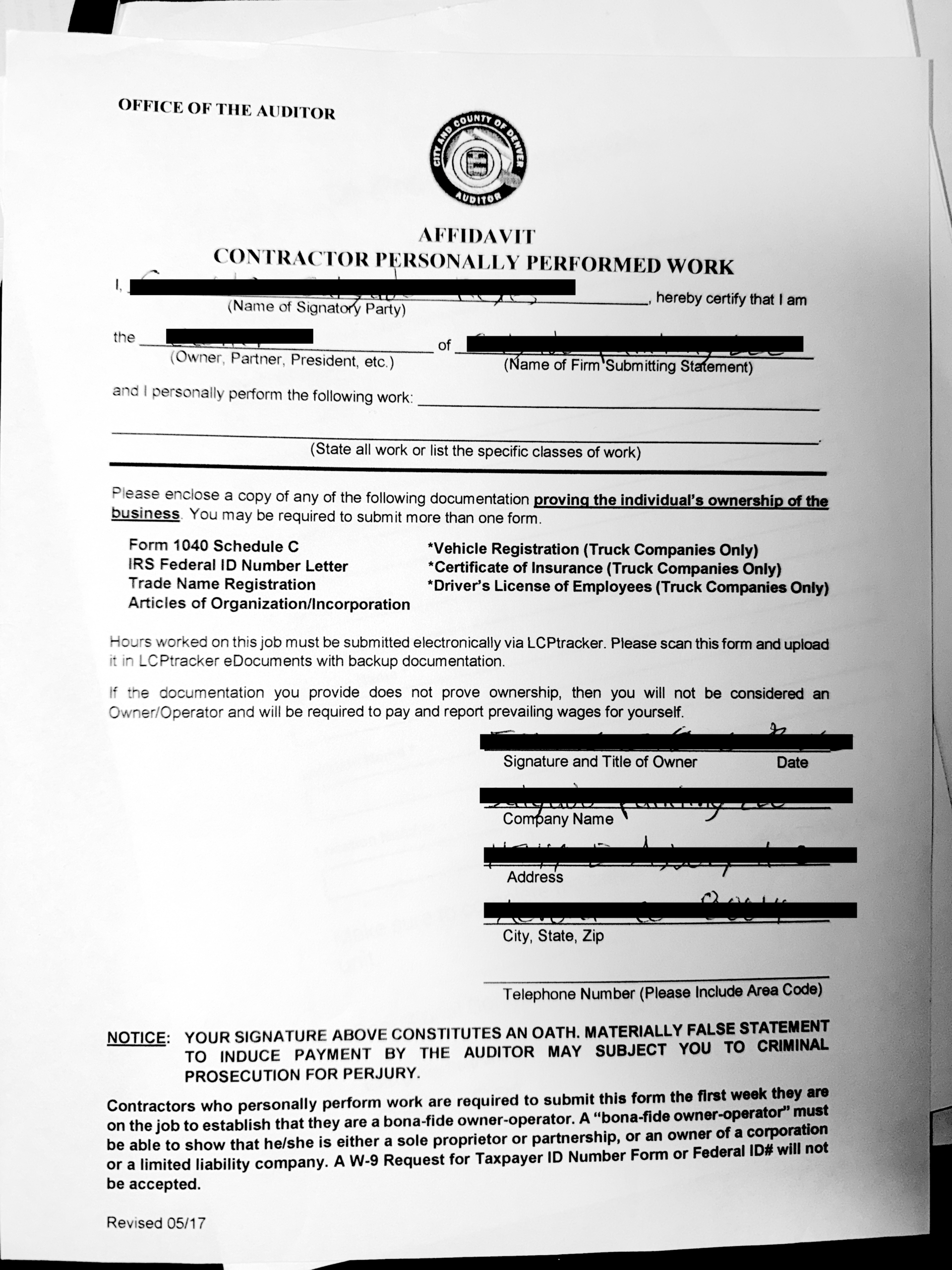
    The project came in on time. The client relationship remained strong throughout. The $107,000 contract — delivered in a single month — represented more than a third of the company’s entire previous annual revenue of approximately $180,000.

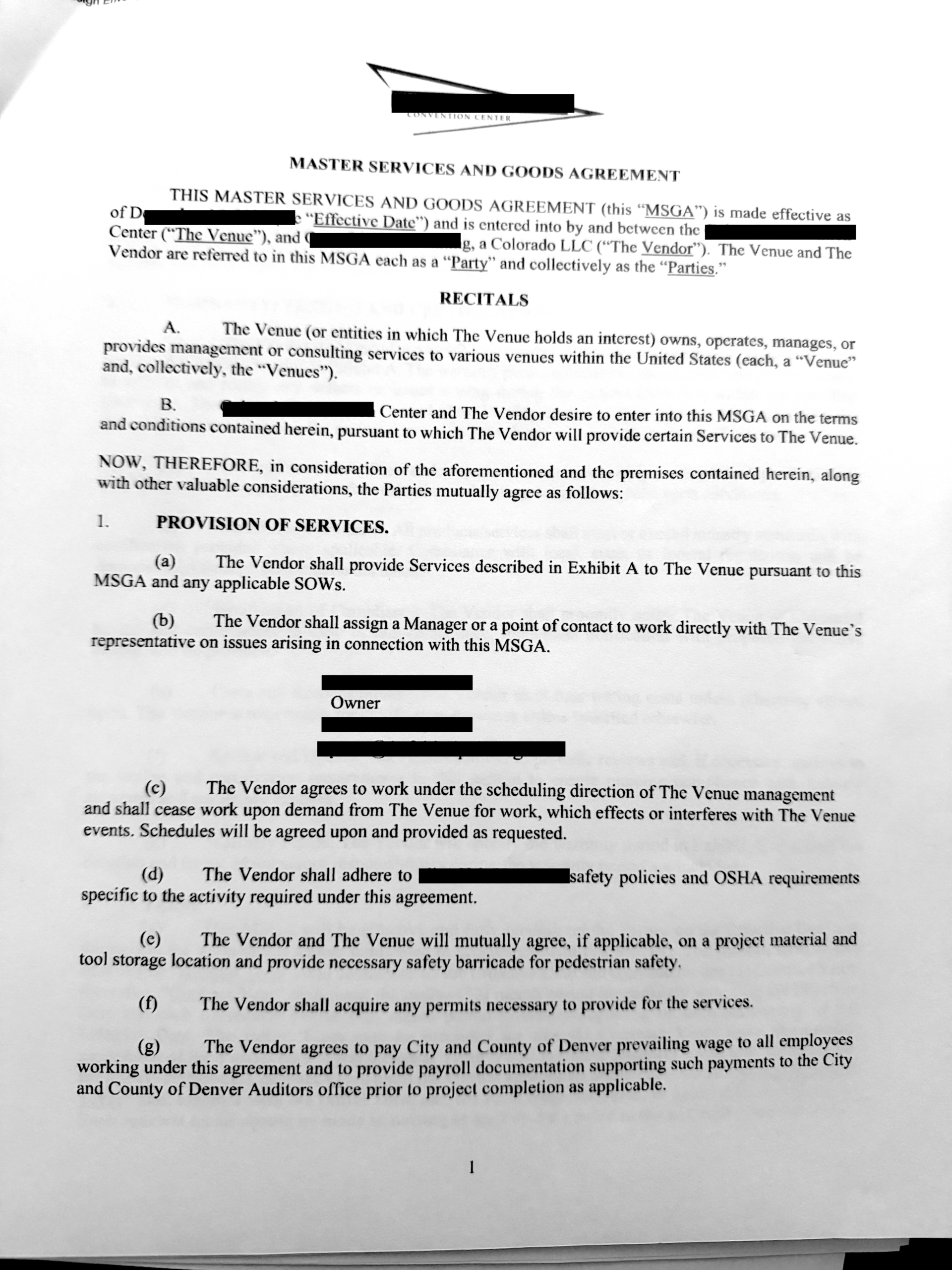
    Signed agreement

    This contract marked a significant leap for One of a Kind Painting, elevating them from a residential focus to securing lucrative commercial work.

    The Results: What One Contract Can Change

    The numbers tell the story plainly. One of a Kind Painting’s average annual revenue before this project was approximately $180,000 — a result of 25 years of residential relationships.

    This revenue required a full year of scheduling, estimating, managing crews, and delivering dozens of smaller jobs.

    The Colorado Convention Center contract added roughly $107,000 in revenue and ~$55,000 in profit in a single month of work, reshaping the future of One of a Kind Painting.

    As Peter reflects on this success, it underscores the importance of adapting to the changing landscape and embracing tools that streamline processes — ultimately enabling businesses like his to thrive in a competitive environment.

  • Unlocking Government Contracts for Small Painting Companies with Proposal Automation

    Unlocking Government Contracts for Small Painting Companies with Proposal Automation

    Discover how small painting firms can leverage proposal automation software to secure government contracts effectively.

    Introduction

    Welcome to our blog post that explores how small painting companies can win big government contracts using proposal automation software. In today’s competitive marketplace, it’s crucial for these companies to streamline their proposal processes to seize lucrative opportunities.

    Challenges of Manual Proposal Writing

    Writing proposals manually can be a daunting task for small painting companies. Many struggle with time constraints and resource limitations, leading to potential loss of contracts.

    • Time-consuming: Manually crafting proposals can take days or even weeks.
    • Inconsistent quality: Different team members may have varying writing styles, affecting the proposal’s effectiveness.
    • Higher error rates: Typos and mistakes can occur more easily when proposals are created manually.

    Benefits of AI-Powered Proposal Tools

    Fortunately, AI-powered proposal automation tools can help overcome these challenges faced by small painting companies. Below are some key benefits:

    1. Increased Efficiency: Automation reduces the time spent on proposal creation.
    2. Improved Accuracy: Reduces human error and ensures quality.
    3. Consistent Formatting: Ensures all proposals maintain a professional look.

    By integrating these tools, small painting companies can concentrate more on their core services instead of the burdensome task of proposal writing.

    Success Case Study

    To illustrate the impact of proposal automation, let’s look at a real success story. One small painting company leveraged AI software and ended up winning a significant local government contract.

    Before adopting the tool, they struggled to submit their proposals on time and lost out on many contracts. After implementing an AI-powered solution, they not only streamlined their proposal process but also significantly increased their win rates.

    Conclusion

    In conclusion, small painting companies have a tremendous opportunity to unlock government contracts through the use of proposal automation. With the right tools, they can overcome the challenges that come with manual proposal writing, embrace the benefits of AI, and achieve success in securing lucrative contracts.

    Empower your business by adopting proposal automation software today to start winning those contracts that will help your painting business thrive.

  • Where to Find Government and Commercial Contract Opportunities as a Small Business

    Where to Find Government and Commercial Contract Opportunities as a Small Business

    Discover top resources for government contracts, from SAM.gov to local options, with step-by-step guidance for small businesses.

    Where to Find Government and Commercial Contract Opportunities as a Small Business

    Meta Description: Don’t know where to look for government or commercial contracts? Here’s exactly where to find bid opportunities — from SAM.gov to local portals to commercial platforms — with step-by-step instructions for small business contractors.

    Target Keyword: where to find government contracts small business

    Most small business contractors have the same experience: they hear that there’s a ton of government work available, they spend an afternoon poking around on the internet, they get confused by acronyms and websites that look like they were designed in 2003, and they give up. The work is out there — that part is true — but finding it requires knowing where to look and what to look for.

    This guide lays it all out. By the end, you’ll have a clear, actionable list of exactly where to go to find contract opportunities at the federal, state, and local levels — and where to find commercial (private sector) B2B work too.

    Federal Government Contracts: Start With SAM.gov

    If you want to compete for federal government contracts, SAM.gov is where everything begins. SAM stands for System for Award Management, and it’s the federal government’s central database for two things: registering your business so agencies can pay you, and searching for open contract opportunities.

    The contract search function at SAM.gov — officially called “Contract Opportunities” — lists all federal solicitations above the micro-purchase threshold ($10,000). At any given time, there are tens of thousands of active opportunities posted. You can search by keyword, NAICS code, agency, location, set-aside type, and solicitation type.

    To search for opportunities, you don’t need to be registered. Anyone can browse. Registration is only required when you want to actually submit a bid. Registration is free, though it does require some setup — your business’s legal name, EIN, CAGE code, and some basic organizational information. Plan on spending about two hours to complete a first-time registration, and expect it to take up to two weeks for full activation. Once you’re in, your registration lasts one year and needs to be renewed annually.

    Practical tip for SAM.gov: start your searches by NAICS code, not keyword. Keywords get noisy fast. Your NAICS code (or codes — you can register for multiple) filters results to the type of work you actually do. A painting contractor typically uses NAICS 238320. HVAC contractors use 238220. Landscaping falls under 561730. General contractors use a range of codes depending on the work. You can find your codes at census.gov/naics.

    Set up saved searches with email alerts. SAM.gov lets you save a search and receive email notifications when new opportunities matching your criteria are posted. This is how serious contractors run their pipeline — they’re not manually checking every day. Relevant opportunities land in their inbox automatically.

    BidNet Add Ons Prices

    USASpending.gov: Research What’s Already Been Awarded

    Before you bid on anything, it’s worth spending time on USASpending.gov. This site tracks every dollar the federal government spends, including every contract award. You can search by agency, contractor, NAICS code, state, and contract type.

    Why is this useful? Because it tells you exactly who’s winning the work you want to go after, what they’re charging, how long their contracts run, and how often those contracts come up for re-competition. If you’re a landscaping company and you want to bid on federal grounds maintenance contracts in your state, USASpending.gov will show you who currently holds those contracts, when they expire, and whether they’ve been won by small businesses before.

    This is competitive intelligence that most small businesses completely ignore. Use it.

    BidNet Pricing

    State and Local Government Contracts

    The federal government gets most of the attention, but state and local government contracts are often easier to win — especially for contractors who are already operating in a specific region. A county government hiring a painting contractor for their facilities doesn’t need a massive national firm. They want someone local, reliable, and licensed.

    Every state has its own procurement portal. Some are well-organized and easy to use; others are a bit harder to navigate. Here’s how to find them: search “[your state] state procurement opportunities” or “[your state] eProcurement.” Most states now have searchable online portals where all active solicitations are posted.

    Beyond state-level contracts, don’t overlook cities, counties, school districts, public housing authorities, transit agencies, water utilities, and municipal hospitals. These are all separate entities with their own procurement processes, and many of them post opportunities on their own websites or through regional procurement portals.

    Two platforms aggregate state and local opportunities worth knowing about:

    • BidNet Direct (bidnetdirect.com) aggregates government bids from thousands of local agencies across the country. You can filter by trade, state, and opportunity type. They have a free trial.
    • FindRFP (findrfp.com) is another aggregator covering federal, state, and local government RFPs across all industries, including construction, landscaping, HVAC, and maintenance services.

    These tools save you the time of checking dozens of individual portals manually. Think of them as search engines specifically for government bid opportunities.

    BidNet Search

    Commercial (Private Sector) B2B Contract Opportunities

    Government work isn’t the only game in town. Large private companies — property management firms, commercial real estate developers, corporate campuses, hotel chains, retail chains, hospitals, universities — all hire contractors, and many of them use formal RFP processes to do it.

    This is sometimes called commercial B2B contracting, and the dollar values can be substantial. A property management company managing 50 commercial buildings might put out a single annual contract for all their HVAC maintenance. A hotel group might run a competitive RFP for painting across their regional portfolio. A university might bid out five years of landscaping services in a single solicitation.

    Where to find commercial RFP opportunities:

    • The Blue Book (thebluebook.com) is one of the most established platforms for commercial construction and related trades. Contractors can find bid invitations from general contractors and owners across the US.
    • Dodge Construction Network (construction.com) is widely used in the construction industry to track commercial project activity, from planning through award. Painting, HVAC, landscaping, and specialty contractors all use it to find GC-led projects to sub into or bid on directly.
    • BuildingConnected (buildingconnected.com) — now part of Autodesk — is heavily used by general contractors to solicit bids from subcontractors. If you’re a specialty trade (painting, HVAC, landscaping), getting registered on BuildingConnected puts you in front of GCs actively looking for subs.
    • ConstructConnect (constructconnect.com) is another large commercial construction bid network used across the industry.

    For non-construction commercial work — like janitorial services, grounds maintenance, facility services — searching LinkedIn for procurement managers or facility directors at large companies in your area and reaching out directly is still one of the most effective approaches. Many commercial contracts are never publicly advertised; they’re awarded to contractors who are already in the buyer’s network. We’ll address how to break into that network in the next article.

    Local Opportunities You Might Be Overlooking

    Some of the most accessible opportunities for a growing small contractor are hiding in plain sight:

    • Public housing authorities. Every major metropolitan area has a local or regional public housing authority (PHA) that manages hundreds or thousands of units. PHAs are federally funded and required to follow public procurement processes. They regularly hire painting contractors, HVAC companies, landscaping firms, and general contractors for both maintenance and capital projects. Search “[your city] housing authority procurement” to find your local authority’s bid listings.
    • School districts. School districts hire contractors constantly — for HVAC maintenance, painting, grounds care, roofing, plumbing, and general repairs. Many districts have a vendors list or pre-qualification process that gets you approved for future work. Contact the facilities or operations department at your local district directly.
    • Park and recreation departments. City and county parks departments maintain extensive grounds, facilities, and infrastructure. Landscaping and painting contracts through parks departments can be recurring and multi-year.
    • Small Business Development Centers (SBDCs). These federally funded centers — located in every state and many cities — offer free consulting for small businesses pursuing government contracts. They can help you navigate registration, certification, and bidding. Find your nearest SBDC at americassbdc.org.

    The Importance of Certifications

    If you qualify for any of the following certifications, get them. They open doors to set-aside contracts that fewer businesses can compete for, which directly improves your odds of winning.

    • The SBA’s 8(a) Business Development Program is for socially and economically disadvantaged business owners. 8(a) certified firms can be awarded contracts on a sole-source basis (no competition) up to certain dollar thresholds. The SBA’s website at sba.gov is where you apply.
    • Women-Owned Small Business (WOSB) certification opens access to set-aside contracts in industries where women-owned firms are underrepresented.
    • Service-Disabled Veteran-Owned Small Business (SDVOSB) certification provides access to set-aside contracts specifically for veteran entrepreneurs. The VA’s Vets First program and SBA both administer this.
    • HUBZone certification is for businesses located in historically underutilized business zones.

    By following this guide, you can efficiently navigate the complex landscape of government and commercial contracts and position your business for success.

    SAM.gov
  • The Architecture of Value: A Critical Guide to Strategic Pricing for Government and Municipal Contracts

    The Architecture of Value: A Critical Guide to Strategic Pricing for Government and Municipal Contracts

    Master the complex art of government pricing—from Davis-Bacon wages to unbalanced bidding. Learn how to construct defensible financial proposals that win contracts while maintaining profitability.

    The Paradigm Shift

    Government pricing is not commercial pricing with extra paperwork. It is a fundamentally different discipline that requires understanding regulatory frameworks, audit requirements, and compliance standards that don’t exist in the private sector.

    The transition from commercial to government pricing requires contractors to abandon market-based intuition and adopt a compliance-first methodology. Every dollar must be traceable, defensible, and aligned with federal acquisition regulations.

    Key Insight: Government pricing is not about guessing numbers—it’s about building defensible financial theses that withstand audit scrutiny.

    Fiduciary Ecosystem

    Understanding the fiduciary ecosystem means recognizing that government procurement officers are stewards of public funds. They operate under strict accountability requirements that shape every aspect of the pricing evaluation process.

    The Federal Acquisition Regulation (FAR) establishes the framework for all government procurement. Key sections include:

    • FAR Part 15: Contracting by Negotiation — governs competitive proposals and price analysis
    • FAR Part 31: Contract Cost Principles — defines allowable, allocable, and reasonable costs
    • FAR Part 36: Construction and Architect-Engineer Contracts — specific rules for construction pricing
    • FAR Part 52: Solicitation Provisions and Contract Clauses — standard terms affecting pricing

    Davis-Bacon Act compliance is mandatory for all federally funded construction projects exceeding $2,000. This requires paying locally prevailing wages and fringe benefits, which fundamentally changes labor cost calculations.

    Market Access

    Accessing government markets requires registration and certification across multiple platforms and agencies. Each provides different opportunities and requires different approaches to pricing.

    Essential registration platforms include:

    • SAM.gov: The primary federal registration system — required for all federal contracts
    • State procurement portals: Each state maintains its own vendor registration system
    • Municipal procurement systems: Cities and counties use platforms like BidNet, PlanetBids, and Bonfire
    • GSA Schedule: For contractors seeking long-term federal supply agreements

    Small business certifications (8(a), HUBZone, SDVOSB, WOSB) provide significant pricing advantages through set-aside contracts and evaluation preferences. For a detailed walkthrough of the registration process and navigating municipal procurement platforms, see our operational guide to city procurement.

    Pricing Methodologies

    Government contracts use several distinct pricing methodologies, each with specific requirements and strategic implications:

    Firm-Fixed-Price (FFP)

    The most common contract type for construction. The contractor bears all cost risk, making accurate estimating critical. Profit is built into the fixed price, and overruns come directly from the contractor’s margin.

    Time-and-Materials (T&M)

    Used when scope is uncertain. Requires pre-negotiated labor rates and material markups. While less risky for cost overruns, T&M contracts face intense rate scrutiny and typically carry lower profit margins.

    Cost-Plus-Fixed-Fee (CPFF)

    The government reimburses allowable costs plus a negotiated fixed fee. Requires detailed cost accounting systems and compliance with Cost Accounting Standards (CAS) for larger contracts.

    Unit Price Contracts

    Common in construction, these require pricing per unit of work (per linear foot, per square yard, etc.). Unit prices must be defensible and internally consistent — evaluators will flag significant deviations from industry standards.

    Direct Costs

    Direct costs are the foundation of any government price proposal. They must be current, accurate, and verifiable.

    Labor Costs

    For Davis-Bacon projects, labor costs must reflect prevailing wage determinations from the Department of Labor. Key components include:

    • Base wage rates: Published prevailing wages for each craft classification
    • Fringe benefits: Required health, pension, and vacation contributions
    • Labor burden: FICA, FUTA, SUTA, workers’ compensation, and general liability insurance
    • Productivity factors: Adjustments for site conditions, weather, and project complexity

    RSMeans, a widely recognized cost data provider, publishes annual construction cost databases that serve as industry benchmarks. Government evaluators frequently reference RSMeans data when assessing price reasonableness.

    Material Costs

    Material pricing must reflect current market conditions and include documentation of supplier quotes. Buy American Act compliance may limit material sourcing options and affect pricing.

    Equipment Costs

    Equipment rates should align with published rate guides (FEMA, Army Corps of Engineers, or state DOT schedules). Owned equipment rates must reflect actual ownership and operating costs, not rental market rates.

    Overhead & Profit

    Overhead and profit calculations are where most contractors make critical errors in government pricing.

    Overhead Rate Development

    Government-acceptable overhead rates must be based on actual auditable costs. Key overhead categories include:

    • Home office overhead: Rent, utilities, administrative salaries, insurance, IT systems
    • Field overhead: Project management, supervision, temporary facilities, safety equipment
    • General & Administrative (G&A): Executive compensation, legal, accounting, business development

    For federal contracts, overhead rates are subject to DCAA (Defense Contract Audit Agency) audit. Rates must be supported by detailed financial records and consistent cost allocation methodologies.

    Profit Margins

    Government profit expectations vary by contract type and risk level:

    • Construction FFP: 8-15% profit on direct costs is typical
    • Professional Services: 7-12% depending on complexity and risk
    • T&M Contracts: 5-10% as the government bears more cost risk
    • CPFF Contracts: 3-7% fixed fee on estimated costs

    The Weighted Guidelines method (FAR 15.404-4) provides a structured approach to profit negotiation, considering performance risk, contract type risk, facilities investment, and cost efficiency.

    Bidding Strategy

    Strategic bidding in government contracting requires understanding evaluation methods and positioning your price accordingly. Our guide to writing winning proposals covers the broader proposal strategy that complements the pricing tactics discussed here.

    Lowest Price Technically Acceptable (LPTA)

    In LPTA evaluations, the lowest-priced proposal that meets all technical requirements wins. Strategy focuses on minimizing costs while maintaining compliance. There is no benefit to exceeding minimum requirements.

    Best Value Tradeoff

    Best value evaluations weigh technical merit against price. A higher-priced proposal can win if it demonstrates superior technical approach, past performance, or innovation. Understanding the evaluation weighting is critical to pricing strategy.

    Unbalanced Bidding

    Unbalanced bidding involves distributing profit unevenly across line items — front-loading early work items or emphasizing items likely to increase in quantity. While not prohibited, materially unbalanced bids can be rejected if the contracting officer determines they pose a risk to the government.

    Price Presentation

    How you present your pricing matters as much as the numbers themselves. Government evaluators review dozens of proposals — clarity and professionalism in your price volume signal competence.

    Price Volume Structure

    A well-organized price volume typically includes:

    • Cover letter: Brief summary of total price and key pricing assumptions
    • Summary schedule: High-level cost breakdown by major category
    • Detailed cost breakdown: Line-item detail supporting each summary category
    • Basis of estimate: Methodology and sources for each cost element
    • Rate substantiation: Supporting documentation for labor rates, overhead rates, and profit

    Common Presentation Errors

    Avoid these frequent mistakes that weaken otherwise competitive pricing:

    • Mathematical errors between detail and summary sheets
    • Missing or incomplete cost elements that evaluators must question
    • Inconsistency between technical approach and pricing (promising resources in the technical volume that aren’t priced)
    • Failure to address all CLINs (Contract Line Item Numbers) in the solicitation
    • Round numbers that suggest estimation rather than detailed calculation

    Related reading: For practical guidance on the full proposal process beyond pricing, see how to win government contracts as a small business. If you’re specifically targeting municipal and city contracts, our municipal market entry guide covers the complete operational blueprint from registration to award.