
Learn what RFPs, proposals, and contracts mean for your small business.
Understanding RFPs, Proposals, and Contracts: A Guide for Small Businesses
Meta description: Not sure what an RFP is? Never written a proposal? This beginner’s guide breaks down every term — RFP, proposal, contract, award — in plain language so your small business can start competing for real work.
If you’ve ever heard someone say “we responded to an RFP and won the contract,” and had absolutely no idea what that meant, you’re not alone. Most small business owners — painters, HVAC techs, landscapers, general contractors — build their entire careers on word of mouth, referrals, and maybe a few handshake deals. The world of formal proposals and government contracts feels like a different language spoken by a different species.
It doesn’t have to be. Every term in that world has a simple definition. And once you understand what these words mean, you’ll realize there’s a massive pool of work out there that you’ve been unknowingly locked out of — not because you aren’t qualified, but because nobody explained the rules. Let’s fix that right now.
What Is a Contract?
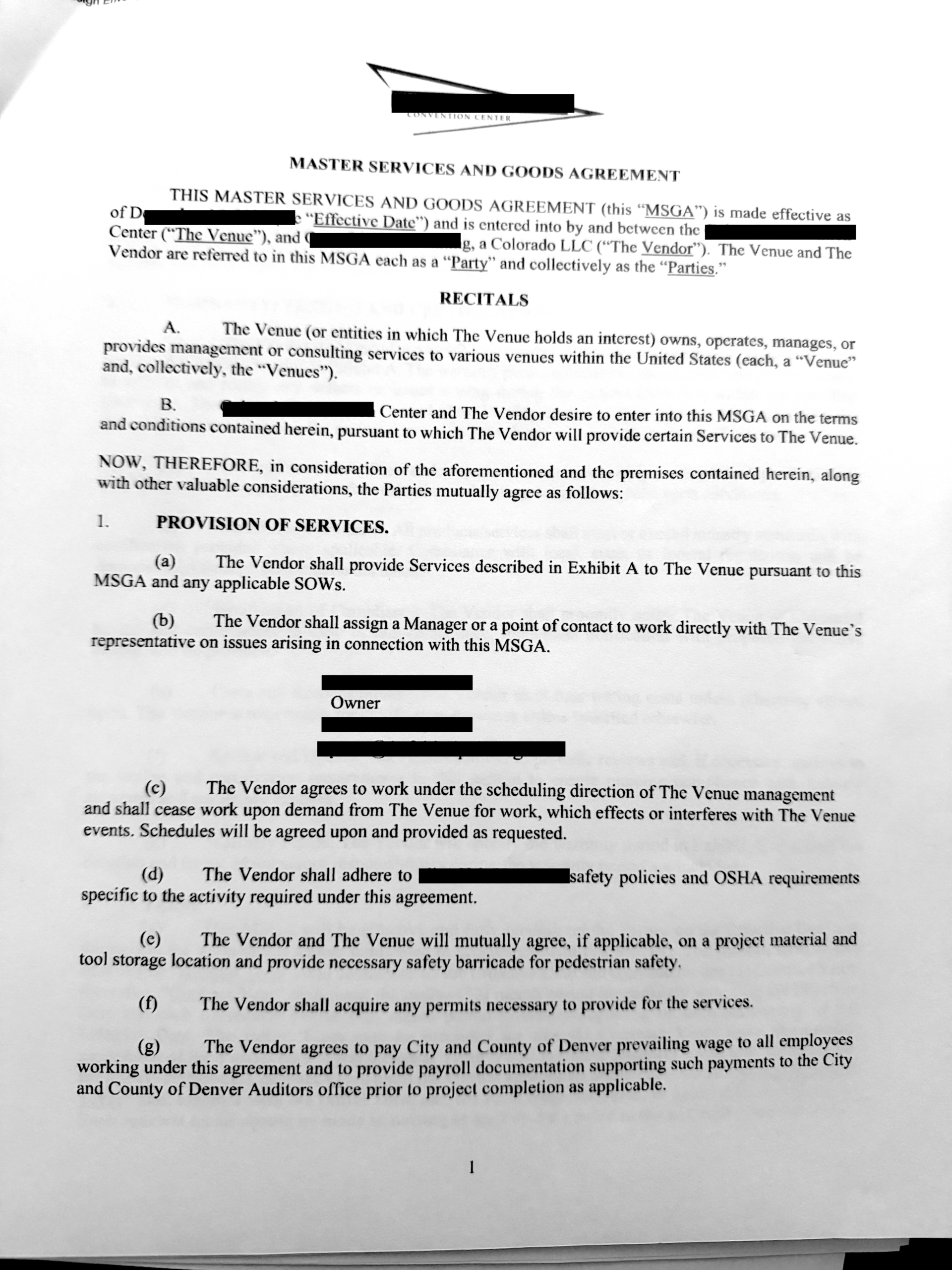
Let’s start with the most basic term of all. A contract is a legally binding agreement between two parties — you and a client — where one party agrees to do something (provide a service or deliver a product) and the other agrees to pay for it. You’ve almost certainly had contracts before, even informal ones. A written estimate that a homeowner signed? That’s a basic contract. A service agreement for recurring HVAC maintenance? Contract.
In the commercial and government world, contracts are more formalized — they specify scope of work, timeline, payment terms, insurance requirements, and performance standards. But at the core, the concept is exactly the same: you agree to do the work, they agree to pay you.
The key difference is scale and structure. Government contracts in particular are governed by specific federal and state procurement laws, which is why the process looks more complicated from the outside. But the underlying deal is the same one you’ve been making your whole career.
What Is an RFP?
RFP stands for Request for Proposal. It’s a document that an organization — a government agency, a corporation, a school district, a hospital — publishes when they need to hire someone to do a job and they want to choose the best option competitively.
Think of it this way: instead of calling three contractors and asking for quotes over the phone, a large organization writes a detailed document that says “here is exactly what we need, here are our requirements, here is our deadline, here is how we’ll evaluate responses.” They publish that document publicly, and any qualified business can respond.
The RFP is the invitation. Your response — your proposal — is your application for the job.
RFPs are used by federal government agencies, state and local governments, school districts, hospitals, universities, corporations, and nonprofits. The federal government alone processes hundreds of thousands of solicitations every year. According to USASpending.gov, the federal government awarded over $750 billion in contracts in fiscal year 2023. State and local governments add hundreds of billions more. Corporate procurement — where large companies hire smaller ones — is a market measured in trillions.
That work doesn’t disappear into thin air. Somebody gets it. It might as well be you.
What Is the Difference Between an RFP, an RFQ, and an IFB?
You’ll see a few different acronyms when you start looking for work to bid on. Here’s what they mean:
- RFP (Request for Proposal): The most common. It’s used when the buyer wants not just a price, but a plan — your approach, your qualifications, your timeline, your methodology. The buyer is evaluating overall value, not just the lowest number.
- RFQ (Request for Quotation): Simpler. The buyer already knows exactly what they want and just needs a price. Less writing, more quoting. Common for commodity purchases or straightforward services.
- IFB (Invitation for Bid): Similar to an RFQ but typically used in government construction and public works projects. It’s price-driven and publicly advertised. The lowest responsive and responsible bid usually wins.
For most small service businesses — painting, HVAC, landscaping, general contracting — you’ll encounter all three, but RFPs are the ones that give you the best chance to differentiate yourself and win on merit rather than just price.
What Is a Proposal?
A proposal is your formal response to an RFP. It’s your chance to say: here’s who we are, here’s how we’d do this job, here’s what it would cost, and here’s why you should pick us over everyone else who responded.
A good proposal typically includes:
- An executive summary: A brief, compelling overview of why your company is the right choice. This is often the first and sometimes only thing a busy evaluator reads carefully.
- Your understanding of the scope: Demonstrating that you actually read and understood what the buyer needs. This sounds obvious, but you’d be surprised how many proposals fail here.
- Your approach and methodology: How you plan to do the work. For a painting contractor, this might mean surface preparation standards, materials specifications, crew size, and quality control procedures. For an HVAC company, it might mean equipment recommendations, installation approach, and commissioning process.
- Your qualifications and experience: Relevant past work, certifications, licenses, insurance, team credentials. Real proof that you can deliver.
- Your pricing: Broken down clearly, honestly, and in the format the RFP requested.
- References or testimonials: Past clients who can confirm you do what you say you do.
A strong proposal isn’t just a price quote with your logo on it. It’s a sales document designed to build trust and confidence. The buyer is deciding whether to hand your company thousands, sometimes hundreds of thousands, of dollars. They want to feel certain before they do.
What Does “Award” Mean?
When a buyer reviews all the proposals they received and makes a final decision, they issue a contract award. Being awarded means you won — the buyer has selected your proposal and is ready to enter into a contract with you.
The award process typically goes like this: RFP is published, deadline for responses passes, evaluators score or rank the proposals, a winner is selected, and the award is announced. In government contracting, awards are often publicly posted, which is actually useful — you can look up who won past contracts, what they charged, and how they positioned themselves.
In some cases there’s a Best and Final Offer (BAFO) round, where the top two or three bidders are invited to sharpen their proposals or pricing before the final decision. In others, especially government contracts, the first submission is the only one you get. This is why it’s critical to put your best foot forward from the start.
What Is Proposio?
Now that you understand what RFPs and proposals are, here’s where it gets relevant for your business specifically. Writing a great proposal is genuinely hard. It takes time, skill, and experience — and most small businesses don’t have a dedicated proposal writer on staff. The owner is usually also the estimator, the crew scheduler, the accounts receivable department, and the person answering the phone.
Proposio is an AI-powered proposal writing platform built specifically for small businesses like yours. It helps you build, write, and organize professional, winning proposals without requiring you to be a professional writer. You feed it your project details, your qualifications, your pricing — and it helps you structure and articulate a proposal that looks like it came from a company five times your size.
More on how to use it to win work in the other posts in this series. For now, just know it exists, and it was built for exactly the situation you’re in.
Why Does All of This Matter for a Small Contractor?
Here’s the statistic that should stop you in your tracks: the U.S. federal government has a legal mandate to award at least 23% of its prime contracting dollars to small businesses. That’s a congressional requirement. In fiscal year 2023, the federal government awarded over $163 billion to small businesses. State and local governments don’t have the same mandate, but many have similar goals and programs.
This work is not reserved for Fortune 500 companies. A painting contractor in Ohio can win a contract to paint a federal building. A landscaping company in Texas can hold a grounds maintenance contract with a school district. An HVAC business in Florida can service municipal buildings under a multi-year service agreement. General contractors of all sizes win public works projects across every state every single day.
The barrier isn’t qualification. The barrier is knowing how to present yourself on paper.
Key Terms Glossary
Before you move on to the next article in this series, here’s a quick-reference glossary of terms you’ll encounter:
- Solicitation: The general term for any document inviting bids or proposals. RFPs, RFQs, and IFBs are all types of solicitations.
- Prime contractor: The main contractor who holds the contract directly with the buyer.
- Subcontractor: A company hired by the prime contractor to perform part of the work. Many small businesses start as subs before winning prime contracts.
- Set-aside: A government contract reserved exclusively for certain categories of businesses, such as small businesses, veteran-owned businesses, women-owned businesses, or businesses in underserved communities.
- NAICS code: The six-digit North American Industry Classification System code that categorizes what your business does. Essential for registering and searching for government work.
- SAM.gov: The federal government’s official registration and opportunity database. You must be registered on SAM.gov to win a federal contract. It’s free.
- Scope of work (SOW): The section of a contract or RFP that outlines the specific work to be done.


Leave a Reply